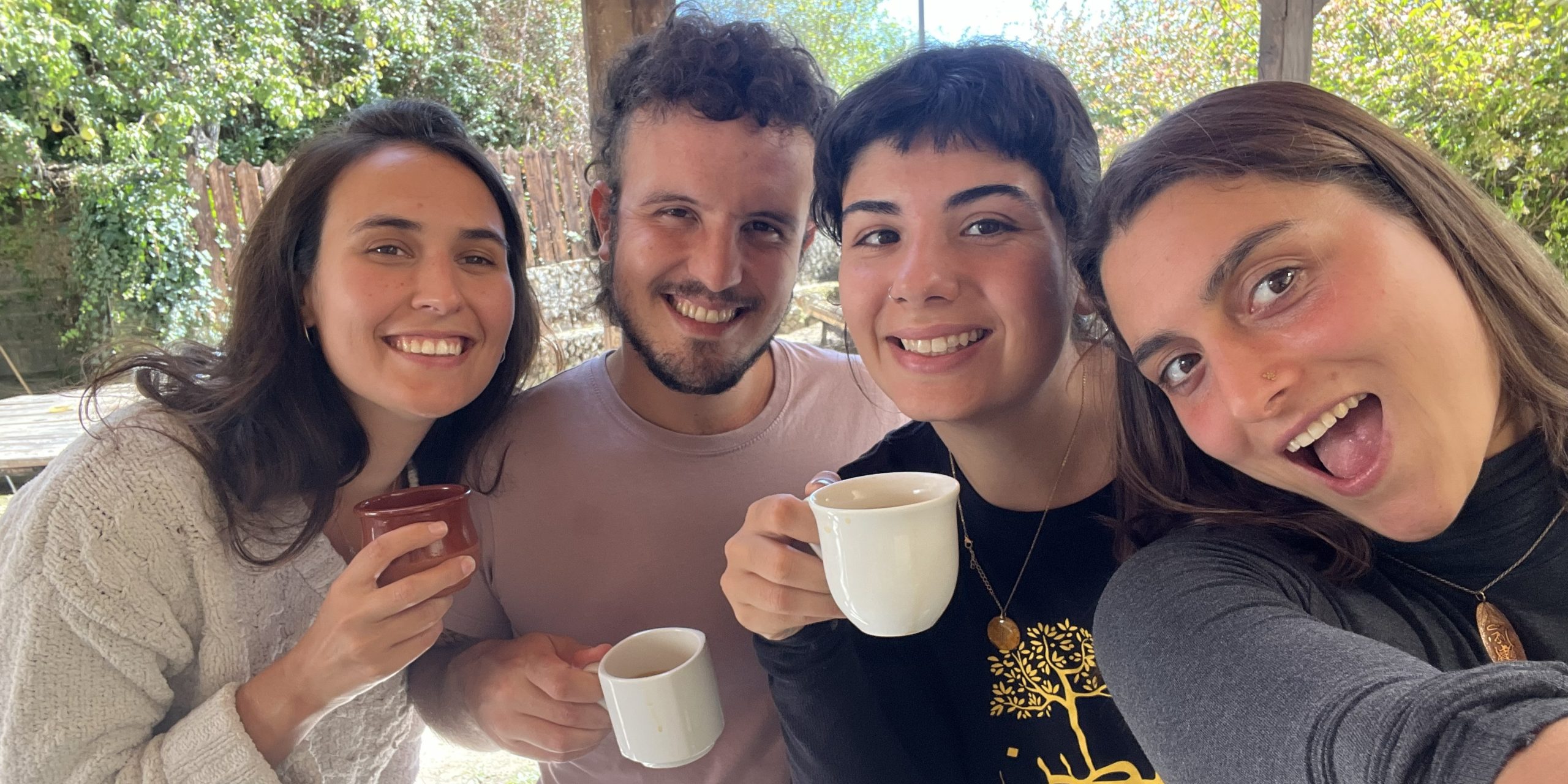
By Anita Correia
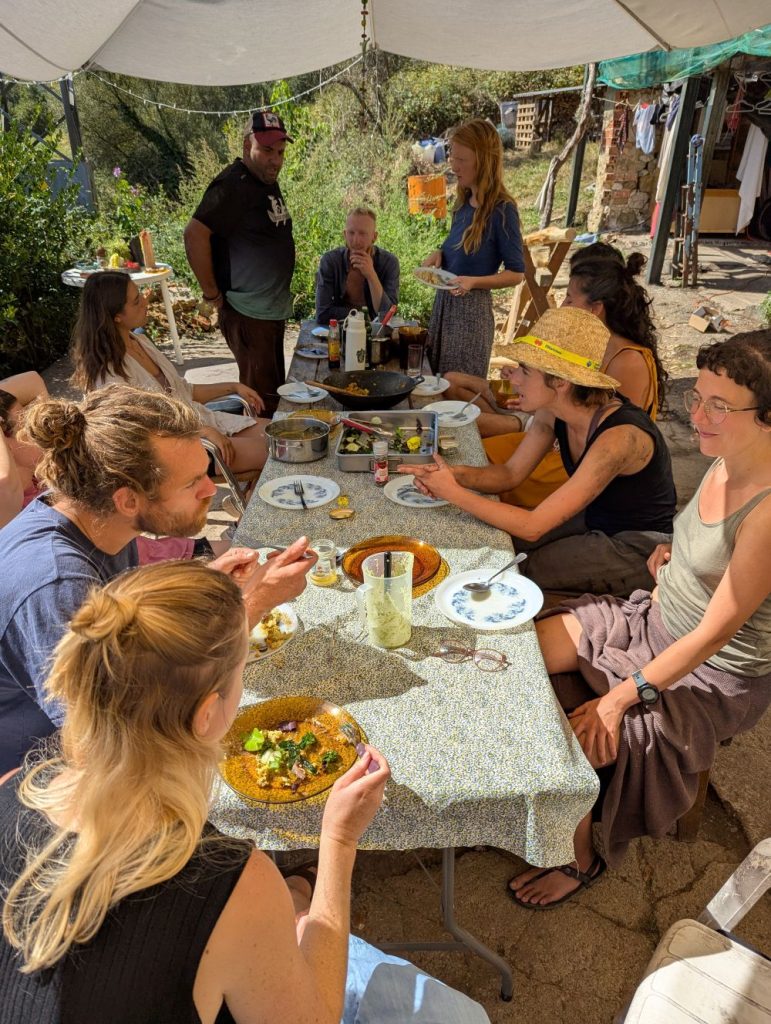
The kitchen was outside, and the mountains of Asturias stretched out behind us. The sky was glowing in red and pink hues at the day’s end. Cesária Évora melodies were playing softly. I was stirring food over the outdoor stove. Cooking for the community is one of the things I enjoy the most. A deep wave moved through me. I turned to Allegra, “Take a picture of me. I can’t remember the last time I felt this good.” Only as it returned did I understand how much faith I had lost.
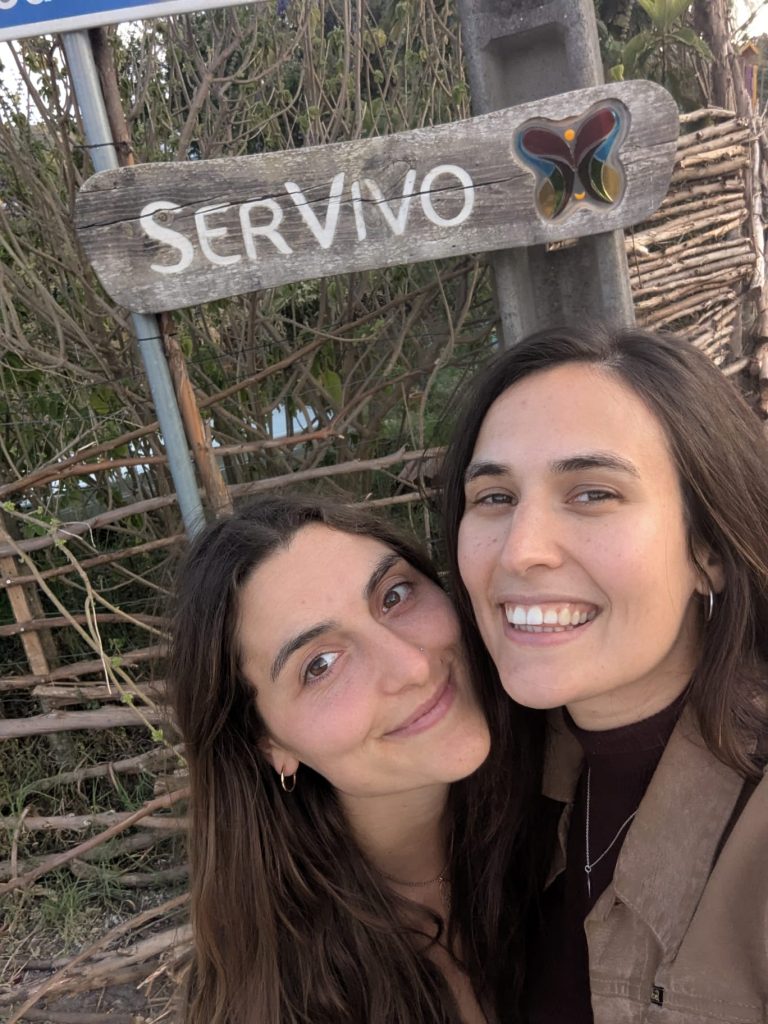
Community Café is a two-year Erasmus+ co-funded Youth Participation Activity under Key Action 1 (KA1). As part of this initiative, I traveled with one of the project members, Allegra, to visit three ecovillage communities—Tortuga and Arterra Bizimodu in Spain, and SerVivo in Portugal.
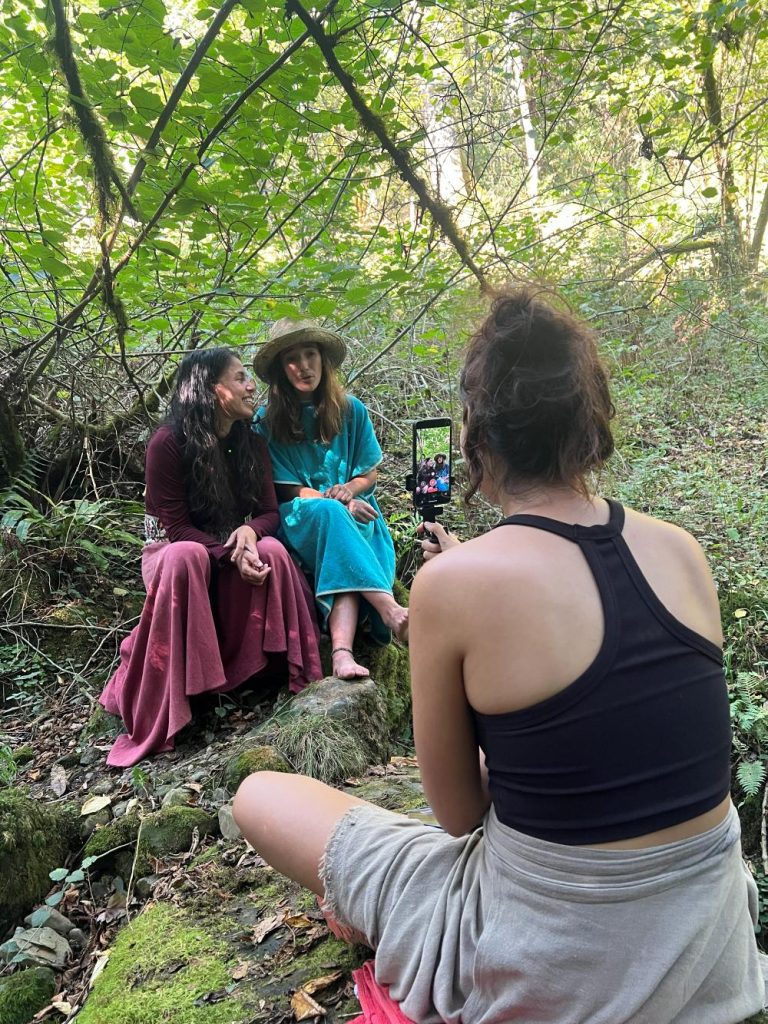
Our aim was to interview community members and gather authentic stories about ecovillages, sustainability, and alternative ways of living. These stories became part of Community Café, a platform created to connect people with ecovillages, share inspiring experiences and practical tools, and encourage them to bring regenerative solutions into their everyday lives.
I have lived in ecovillages before, and those experiences transformed my life. But community life brought challenges too, especially on a social level. At some point, I needed distance from the movement to integrate what I had learned.
We were there to listen, learn, and share the experiences of communities daring to live differently. For me, the journey became a homecoming—one that restored and deepened my faith in the ecovillage movement.
Watching people dedicate their lives to creating systems that care for both people and the planet – growing their own food, relying on renewable energy, resolving conflicts, making decisions together – I felt admiration. To me, they are heroes. They dare to dream and to live those dreams, even when it’s not easy.
Living the Question
In total, we spoke with more than fifteen ecovillagers and asked each of the same questions: Why did you choose to live in an ecovillage? What has been the most rewarding part of the experience? What has been challenging?
Although their stories were unique, I was struck by how often similar themes emerged. Different ages, backgrounds, and cultures, yet many spoke of the same longing: to live more meaningfully, to feel closer to nature, and to align their lives with their values. Listening, I kept thinking: we are all far more alike than we imagine. Beneath our differences, are we searching for the same things?
A common thread ran through all of them: the desire to be the change they want to see in the world. One person said: “For me, living in an ecovillage is about walking the talk.” That simple sentence captured the essence of what I witnessed during the trip. Ecovillagers are not just discussing the changes they would like to see in the world; they are actively trying to live them. I found that deeply inspiring.
At SerVivo, I was moved by the story of a group of people who started with little more than a dream and almost no money and gradually, through years of effort, challenge, and perseverance, built a beautiful community space and dance studio where people can come together and express their creativity.
At Tortuga, a much younger project, I witnessed fresh energy. People dreaming of transforming a piece of land in Asturias into a harmonious home connected to nature and where children can grow up freely. From the moment they woke up, attention turned towards a shared question: how can we help the community today? How can we move this common vision forward?
People in these communities are not escaping life. They are choosing a different one. They are acting on their values and living in alignment with what they believe – a kind of everyday activism. Many shared how they once felt disconnected from modern society, from people, from nature, from themselves, and how community life offered a path back to connection. What they’d found was simply the power of human connection, made intentional.
To live in alignment with your values is the most radical act of hope I’ve ever witnessed.
The Slower Rhythm
Each community taught me something different – not just about sustainability, but about what it means to be human. Happiness, I found, lives in simple moments.
Waking to birds singing, walking barefoot on the earth, or sitting quietly in the sun felt like a reset for my mind, a reminder of a balance I hadn’t realized I had lost. A nudge to slow down, notice, and be present to the world around me.
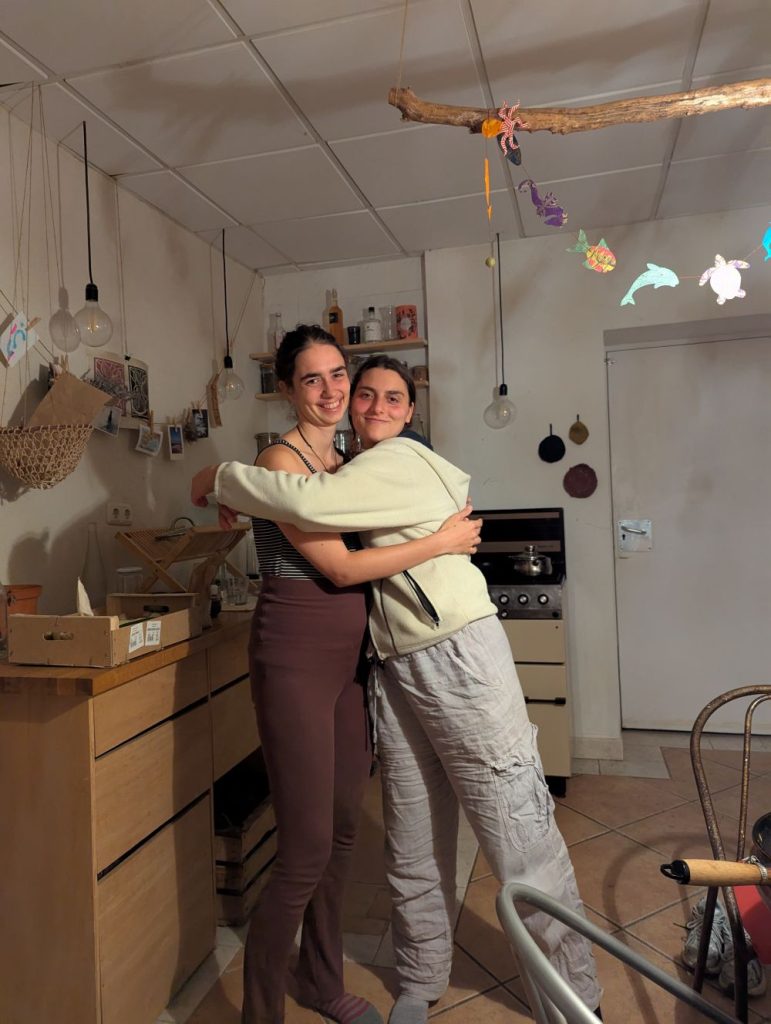
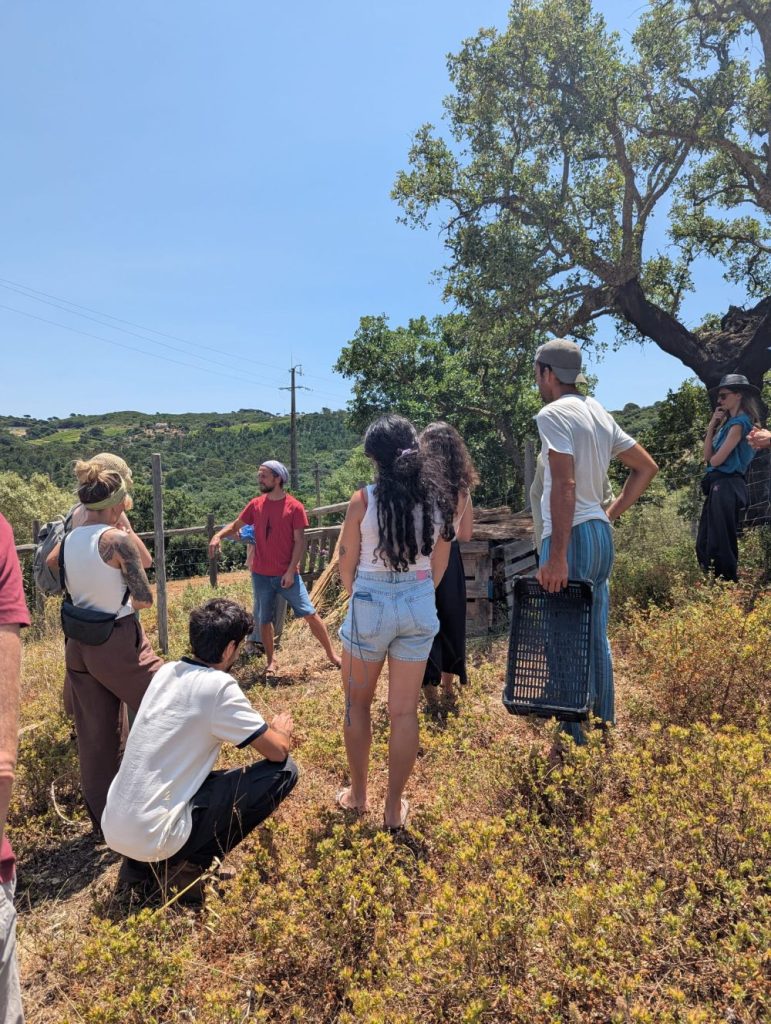
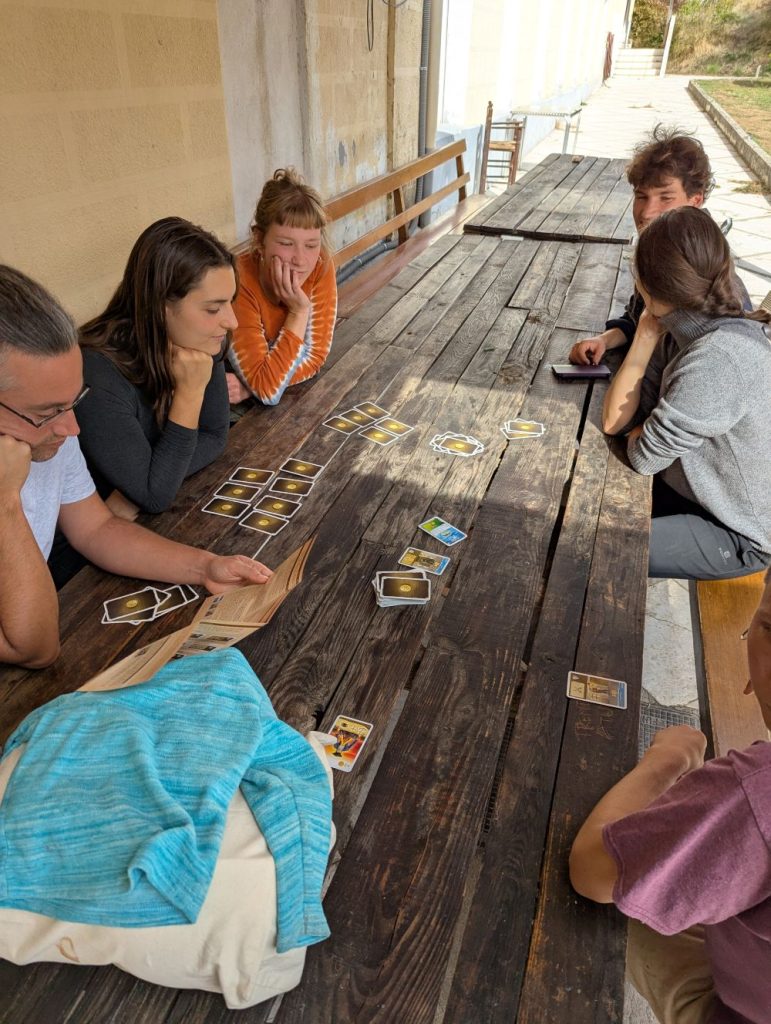
In Arterra, we happened to visit during their anniversary celebration. For three days, more than forty people gathered to share meals, music, conversations, workshops, and dancing. Again and again I found myself moved by the beauty of what they had built together. People were cooking, playing music, organising activities, playing games – making everything happen by hand, together. There were no phones in sight, no television, just people coming together to celebrate life. I was wholly present. The community moved like an ecosystem, where each person contributed naturally, in their own way. It felt like magic to witness what human beings are capable of when they work towards something together.
Living so closely with others also showed me how much we need one another – to share and support each other – but also the importance of space, of pausing and reflecting, which strengthens connection.
Small Strong Steps
Returning to the city after that month was a shock. I missed the mountains, the shared meals, and the slower rhythm. I also felt the weight of what I’d left behind in the news – Palestine, governments failing to act, AI advancing faster than any of us can reckon with.
I often carry a painful feeling that I am not doing enough. When I read the news and see so much suffering, part of me feels guilty for carrying on with my normal life. What difference does writing an article make when people are dying? What difference does planting a garden make? The problems feel so enormous, and anything I can do insignificant in comparison.
Yet spending time in community helped me see another perspective. None of the people I met were pretending they could solve the world’s problems. They were simply choosing not to give up. They were creating the change they wished to see within their own communities, caring for the land, supporting one another, and living according to their values.
Perhaps the opposite of despair is not having all the answers. It is continuing to take small, meaningful action. It reminded me that while I may not be able to stop a war or change the world on my own, I can still contribute to creating more connection, care, and beauty in the small corner of the world that I touch.
This journey reminded me that change doesn’t have to wait for institutions or governments. It can start with people, right now. Maybe the world we’re longing for isn’t somewhere far away.
Writing this, I realize I may not be sharing anything particularly new. These are simple things that most of us already know. Yet, the impact this trip had on me was very real. Hard to describe in words, but real, strong, and powerful. Somewhere along the way, I had forgotten how good it felt to live a simple life and to be fully present with what is around me, with sincerity and hope.
Maybe the world we’re longing for isn’t somewhere far away. Maybe it begins with us – one connection, one choice, one story at a time.