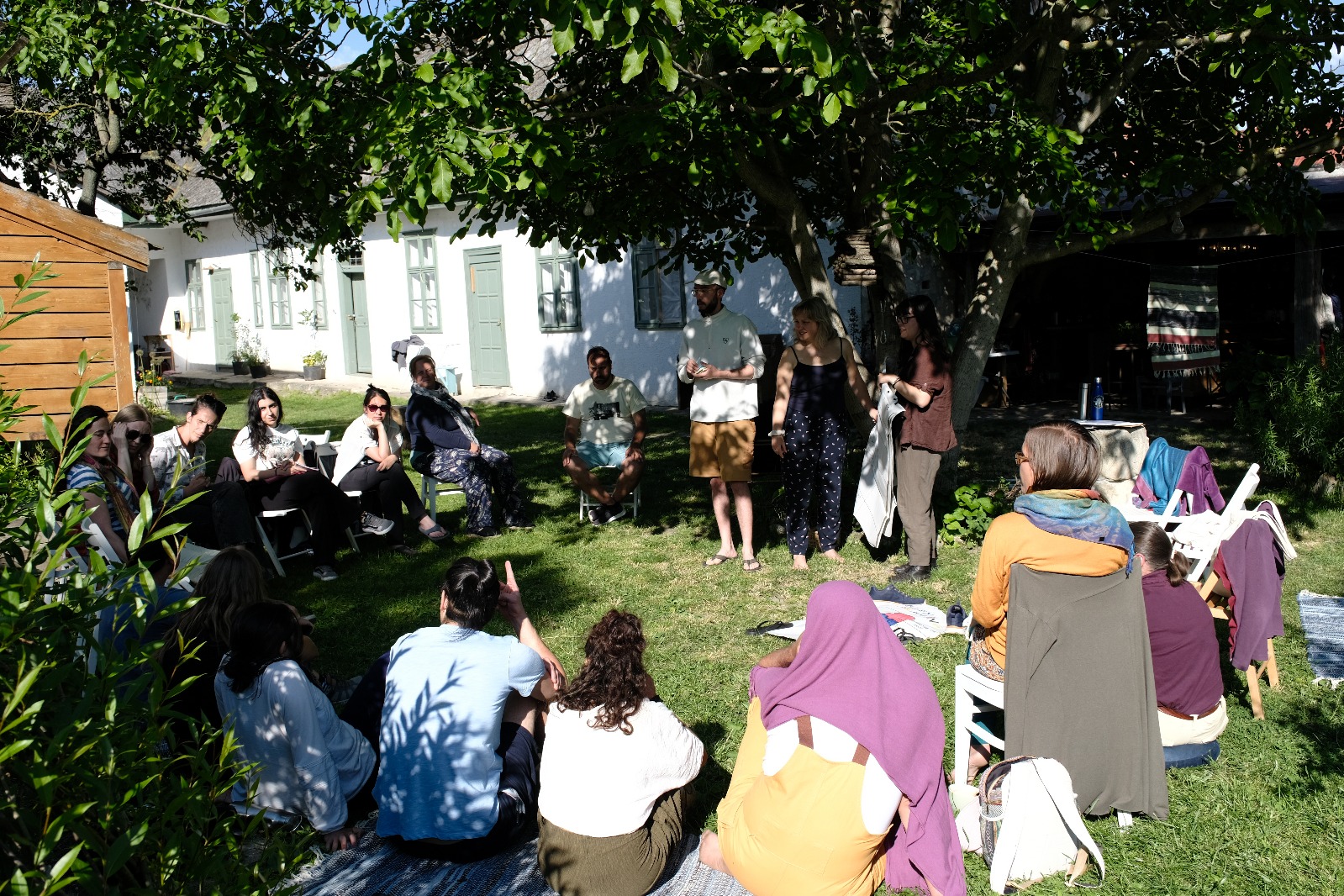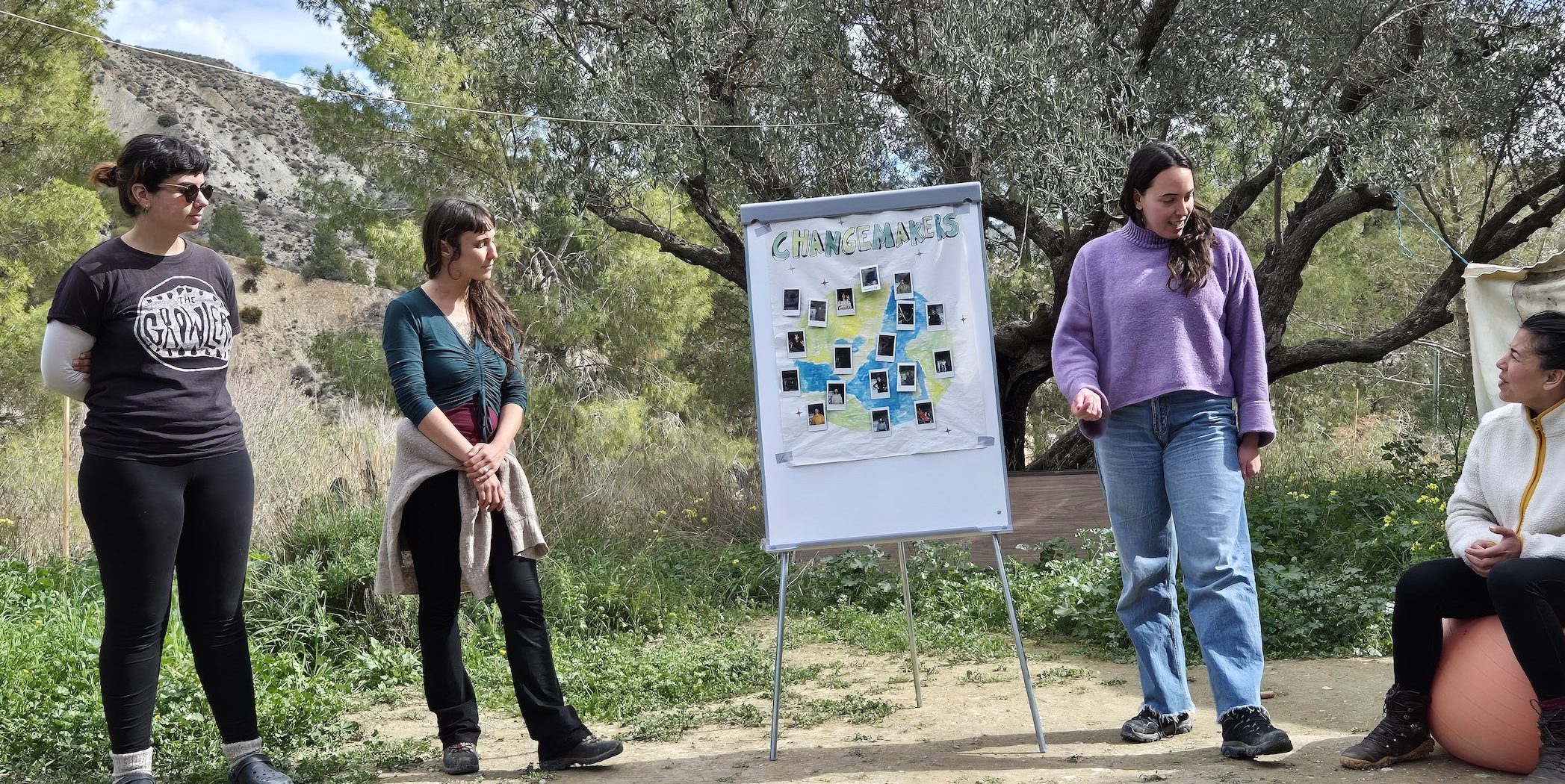
During the Storytelling for Change Erasmus+ event held in Sunseed Desert community in February 2025, participants were asked to carry forward a project that would have an impact in their local communities. Some participants decided to join forces with our partner organisations to co-create a one day local event in Ängsbacka, SerVivo, Sunseed and Catfarm. The rest of the participants took inspiration from their time in sunseed and brainstorming sessions to organise an activity led and organised by them. From starting a new association to sharing about Erasmus+ initiatives with young people, the participants of Storytelling for Change (a Youth Participation activity) organised a variety of individual local actions that are definitely worth the read. Here are some of the reflections from the organisers about the activities and how they went:
FRANCE
Sharing Erasmus+ Opportunities
By Noémie Rigaud
October 14th 2025
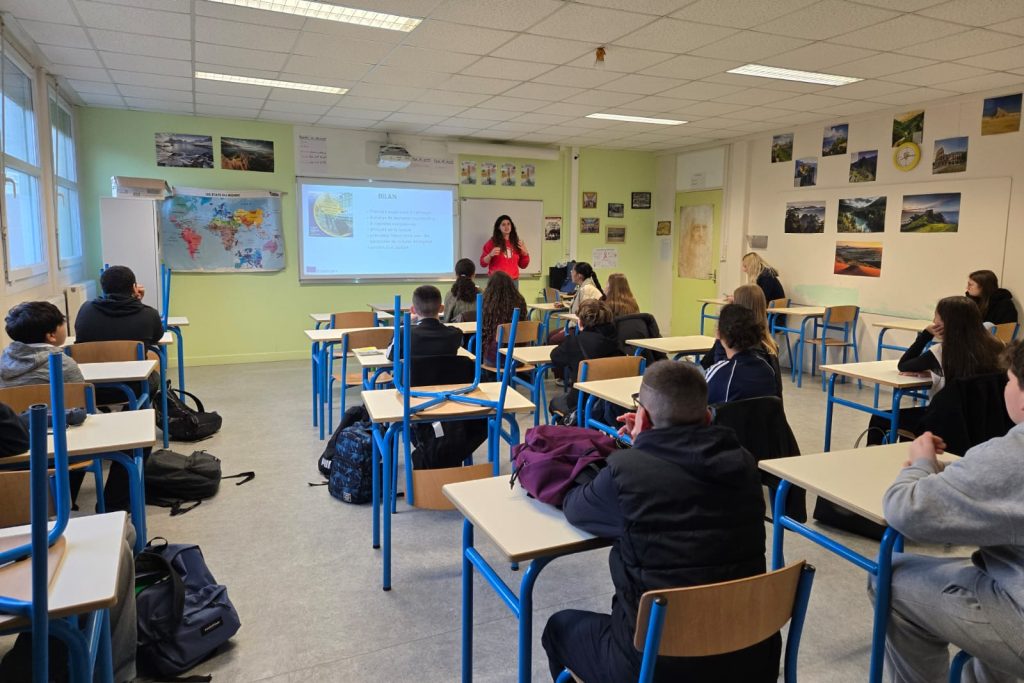
“I have been in a secondary school in the north of France where I met 2 classes of youth aged around 14 years old.
We talked about Erasmus + in general, what is it, what are the opportunities, showing them that there is more than studying abroad and especially that there are a lot of ways to go even when you are facing difficulties (mostly economic in this case).
We also discussed what is an ecovillage and that there are people living in communities. I loved doing that because I hope some of them will remember it and seize the opportunity to go abroad and see more. I truly believe that Erasmus + exchange changes you in a meaningful way. Discovering ecovillages with community Café, with this exchange in Sunseed, has really opened me to a new spectrum of ways of living that I want to explore and I hope one day, some of them will too.”
SPAIN
Establishing La Zalagarda Association
By Marina Domínguez
September 24th 2025
“One of the things that inspires me most when I take part in a project, a talk, or an exhibition is realizing that it all happens because one or more people had an idea and decided to bring it to life. Thanks to that creative drive, spaces are born where people can share experiences, reflections, and meaningful moments together.
That’s exactly what happened with “Storytelling for Change”, the first Community Café project, which was created with the intention of bringing together a group of young Europeans to learn about ecovillages and intentional communities, to explore the art of telling our own stories, and to connect with ourselves in order to express what we carry within. When I came back from that project, I felt deeply inspired by the idea of creating things to share with others. Since I wasn’t the only one among my friends who felt the same way, we decided to meet over the summer and form an association that would give us a framework to organize future activities. This led to many late-night gatherings in the park, where we discussed how we wanted to shape the association. Eventually, we concluded that what we truly wanted was to create spaces where young people from nearby villages could come together, share activities, and promote their own ideas and interests.
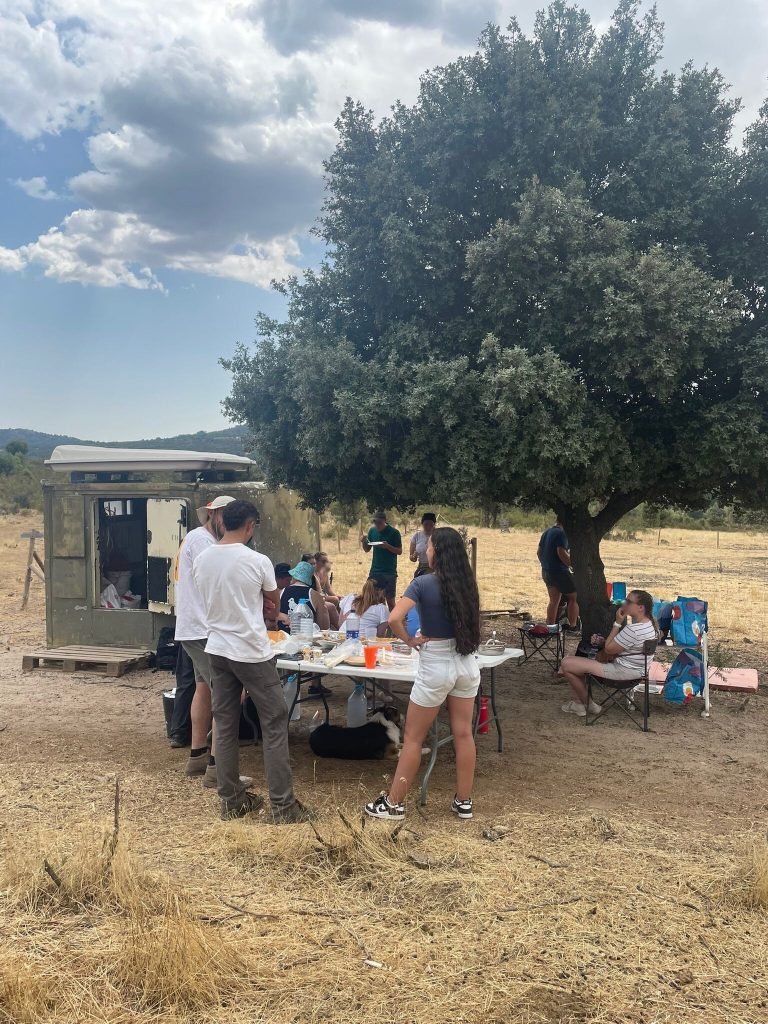
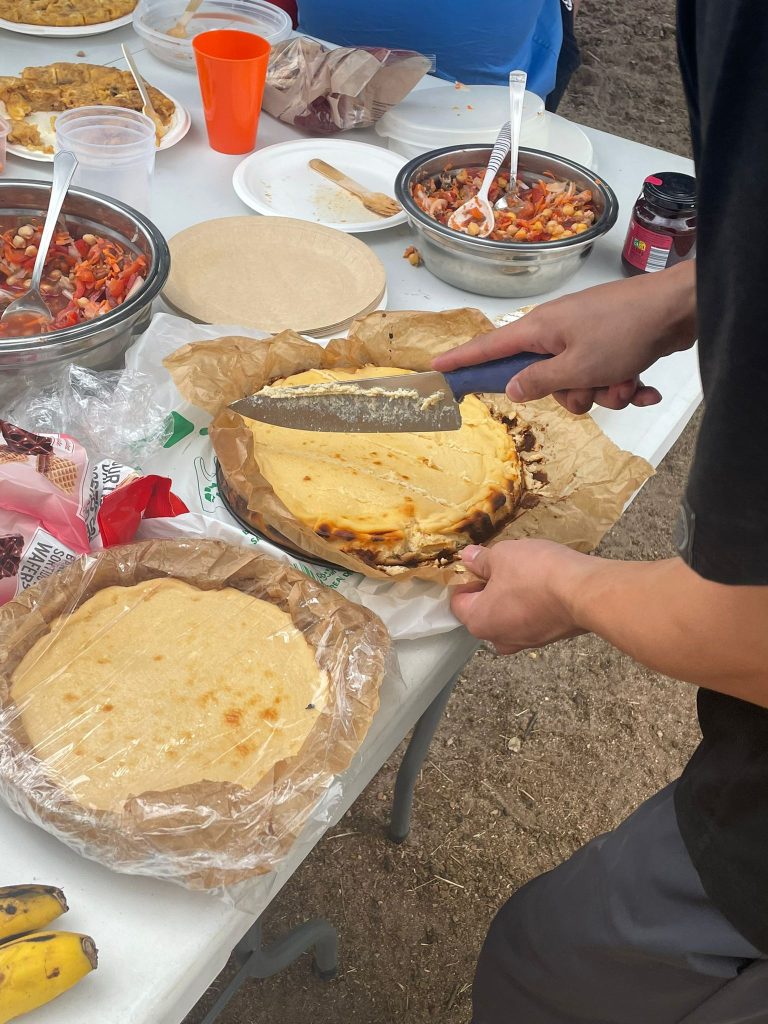
Once the association was officially established, we had the chance to organize our first activity. A group of young British livestock farmers were touring different Spanish farms to learn about extensive livestock systems, and one of their stops happened to be at the farm of one of our members, a young goat herder. We took this opportunity to work together as an association showing them around the farm and the animals, and preparing traditional Spanish dishes so they could experience our cuisine and enjoy a genuine moment of cultural exchange, as has long been done across Mediterranean countries. Today, we continue to shape and reflect on the direction we want the association to take. We do so with enthusiasm and with the conviction that many things can indeed be brought to life as long as there’s the willingness and effort to make them happen.”
‘Starting a Community’ Online Event
By Bernarda DeOliveira
October 8th 2025
“The mixed online/in-person event I organized at Arterra Bizimodu ecovillage was a cozy evening of inspiring conversation. Fellow volunteers from the community joined and 5 others joined online to hear the perspectives of 3 different ecovillages on what it’s like in the beginning stages of starting a community. It was especially inspiring to hear from Mauge, who has been at the start of not only Arterra Bizimodu 11 years ago but also another nearby community Lakabe that started more than 20 years ago. Hearing from the other two young ecovillages sharing similar experiences and motivations made me feel that even though it’s not an easy process, it’s definitely one that I see myself embarking on too one day”
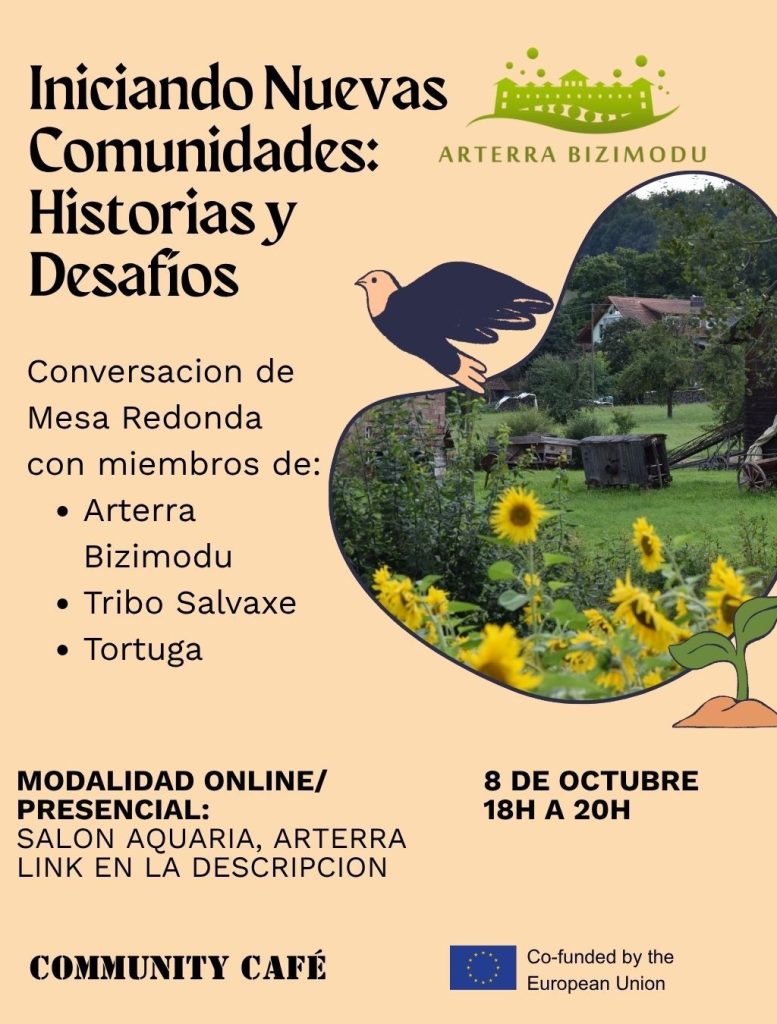
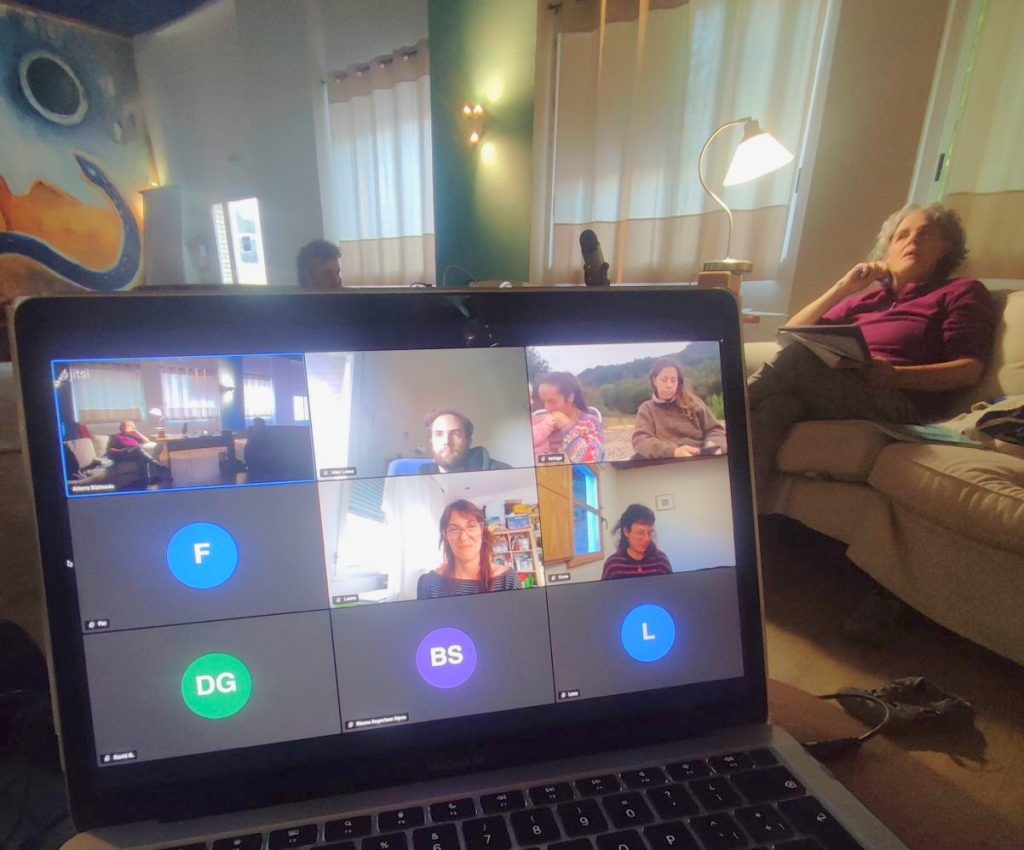
A participant’s reflection of the event
“The mixed online/in-person event I organized at Arterra Bizimodu ecovillage was a cozy evening of inspiring conversation. Fellow volunteers from the community joined and 5 others joined online to hear the perspectives of 3 different ecovillages on what its like in the beginning stages of starting a community. It was especially inspiring to hear from Mauge, who has been at the start of not only Arterra Bizimodu 11 years ago but also another nearby community Lakabe that started more than 20 years ago. Hearing from the other two young ecovillages sharing similar experiences and motivations made me feel that even though its not an easy process, its definitely one that I see myself embarking on too one day.”
Critical Thinking Applied to New Technologies
By Jose Emanuel Rivero Ponce de León
November 19th 2025
“The activity I proposed for the Community Café project was a workshop titled “Critical Thinking Applied to New Technologies,” to be held in the Arterra Bizimodu community. In the end, I conducted four workshops, though none on that specific topic. Three of them were co-led with my philosopher friend Rosalba as part of a course we created called “Filosofía de estar por casa” (“Everyday Philosophy”). Our aim was to show how philosophy can be useful, fun, and necessary when connected to daily life. The fourth one was more personal: a workshop on classism, exploring how unaware we often are of it—even in groups highly conscious of feminism, racism, or LGBTQ+ issues.
In the philosophy workshops, we began by exploring what philosophy is, followed by logical fallacies and cognitive biases that affect our reasoning. The second session focused on living in the post-truth era, examining how different philosophers have approached the question of Truth (and its absence). For the third, we took inspiration from the “Death Café” initiative, originally created in London as a space to discuss death, and adapted it to reflect on finality, mourning, and various kinds of endings. The feedback was very positive; one participant shared how valuable and refreshing these spaces were in a community life often centered on work.
For the workshop on classism, I chose a method that prioritised dynamics and shared experiences over heavy theory. From the start, I knew some participants came from very privileged backgrounds, and it was moving to witness how open conversation with less privileged participants helped raise awareness. One piece of feedback that touched me deeply was that the session helped people work through the guilt and shame that had been preventing them from engaging with the topic of class.”
Bernarda’s testimony:
“I really enjoyed the discussions that surged from this workshop, it made me think about how I define class and how it’s defined larger society in ways I hadn’t considered before. The small group discussions also provoked interesting conversations that helped me connect to my fellow volunteers in deeper ways.
Testimonial for the Philosophy workshop: In the philosophy workshops I’ve attended I always came in thinking I would take on more of a listening role since I have never interacted much with philosophy, but I always ended up participating in the conversations. The workshops were very informative yet had a beginner-friendly dynamic. It was also nice to have those types of deeper reflective conversations with residents of Arterra, the types of conversations that don’t always come up casually over lunch.”
PORTUGAL
Workshop during Eco Tot Training
By Ana Filipa
September 2025
“I ended up giving a 1h30 workshop during my Eco Tot training, where I applied skills I developed from various projects, including the Community Café.